1. How did you end up in the car industry?
Like most career advice, there is no single path to get to where you want to be. Though I find it helps to learn how a person ended up in the job that I want and that is why I’ll share briefly how I ended up. Here’s the summary:
I wanted to be a car designer since I was young. But I discovered that sketching was not for me. So when it was time to pick something to study after high school, I picked a broad degree covering computer science, engineering, and design. During my studies, I discovered the field of Human-Computer Interaction and pursued this in my master’s degree. It was then that I discovered that I could combine my passion for cars, computers, and design as a UX designer. During my studies, I tried to do projects related to cars. At the end of my master’s degree I had to do an internship. I reached out to every single car company and two replied: BMW’s R&D lab and Renault’s design department. I chose Renault as I could get a great idea of what it would be like working with car designers in the main design HQ. While there, I worked on a cool project around gesture interaction as an alternative to touch screens.
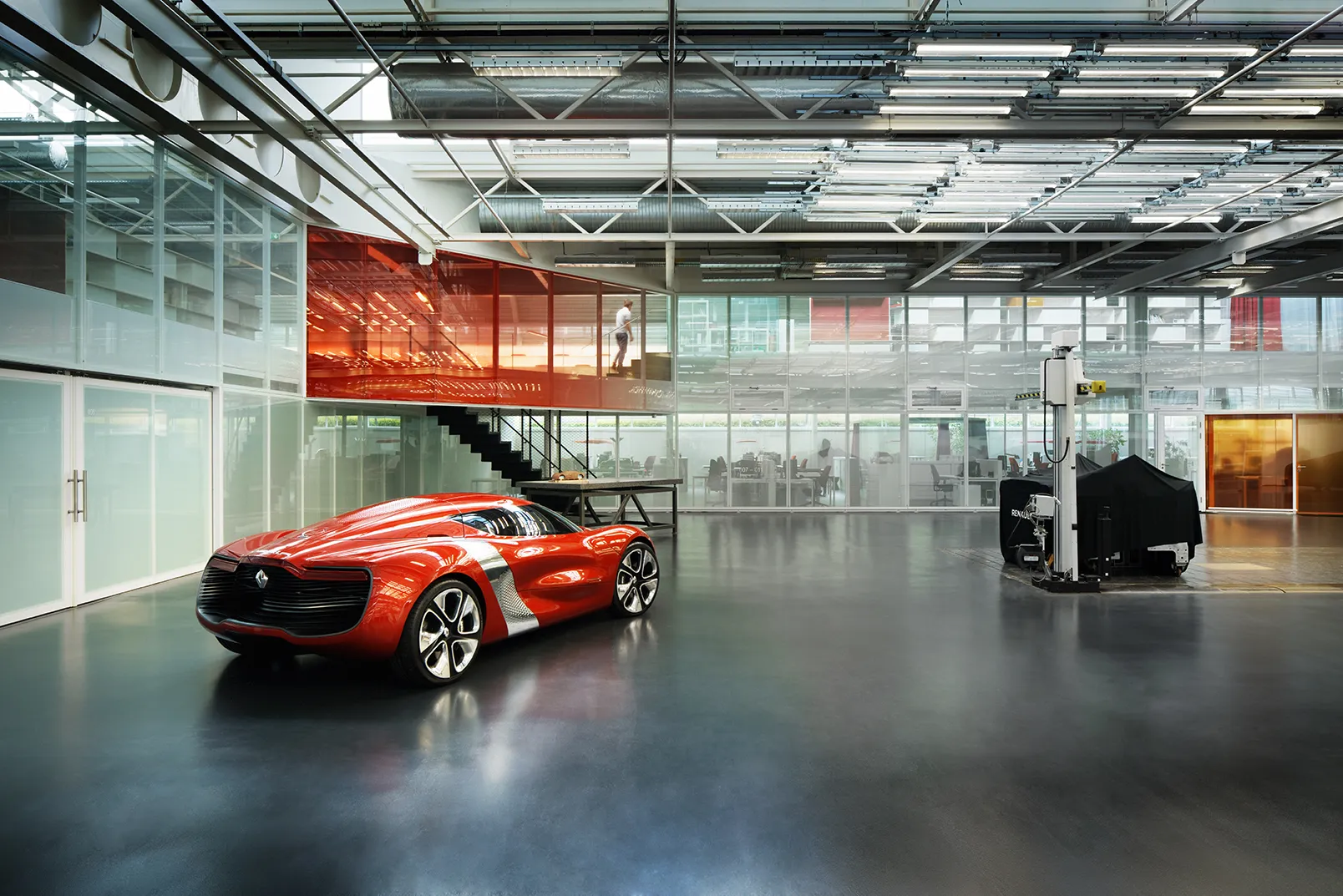
After my internship I wanted to stay at Renault but they couldn’t offer me a position (something to do with the CEO being arrested and smuggled out of Japan). Life as a recent graduate sucks. Not many companies hire designers with little experience. I had to leave Paris and moved back in with my parents. I put my dream of working in the car industry on hold. Little did I know that this would be a great thing.
After months of applying, I got an offer at an agency in Amsterdam. Working at an agency as a young designer is great. You get to see many large companies from the inside, you see lots of different projects, lots of different cultures, organizations, and problems. I learned that 50% of design work at big companies is politics, presenting, schmoozing, and planning.
I still wanted to work in the car industry but had no relevant projects. I saw other designers with popular blogs. So I started my own, totally focused on automotive UX design. My first articles sucked.
I moved back to Paris. My then-girlfriend, now wife, was offered a job there. I found an agency that worked with Renault and was happy to do something with cars again. 3 months in, Renault canceled the contract and the agency closed the Paris office. I was laid off.
I spent my time applying to every design job in Paris and working on my blog. I used my blog to work on some design ideas I had. Some articles got traction!
I found a job at a fast-growing startup. For the first time, I was part of an internal design team rather than an external agency. The startup had a great product team and I learned a ton about how software projects are run at fast tech startups.
1 year in, my wife was offered a job in Berlin. We moved there and I worked remote for some time.
I got a message from someone who read my blog. He owned a development agency and was starting a new company with the aim of building an infotainment system as a product. Did I want to lead the design and product side? Yes!
I spent more than four years designing and building a complete infotainment system. I was not only a designer, but also responsible for deciding what to build, who it was for, how to price it, how to find customers, marketing, sourcing hardware, and everything else. I saw infotainment from every angle. I realized I enjoyed speaking at events and did this a few times.
The product was aimed at small carmakers but in the end, we had most interest from large carmakers. They used it internally and we helped them understand how to design and build software in a better way.
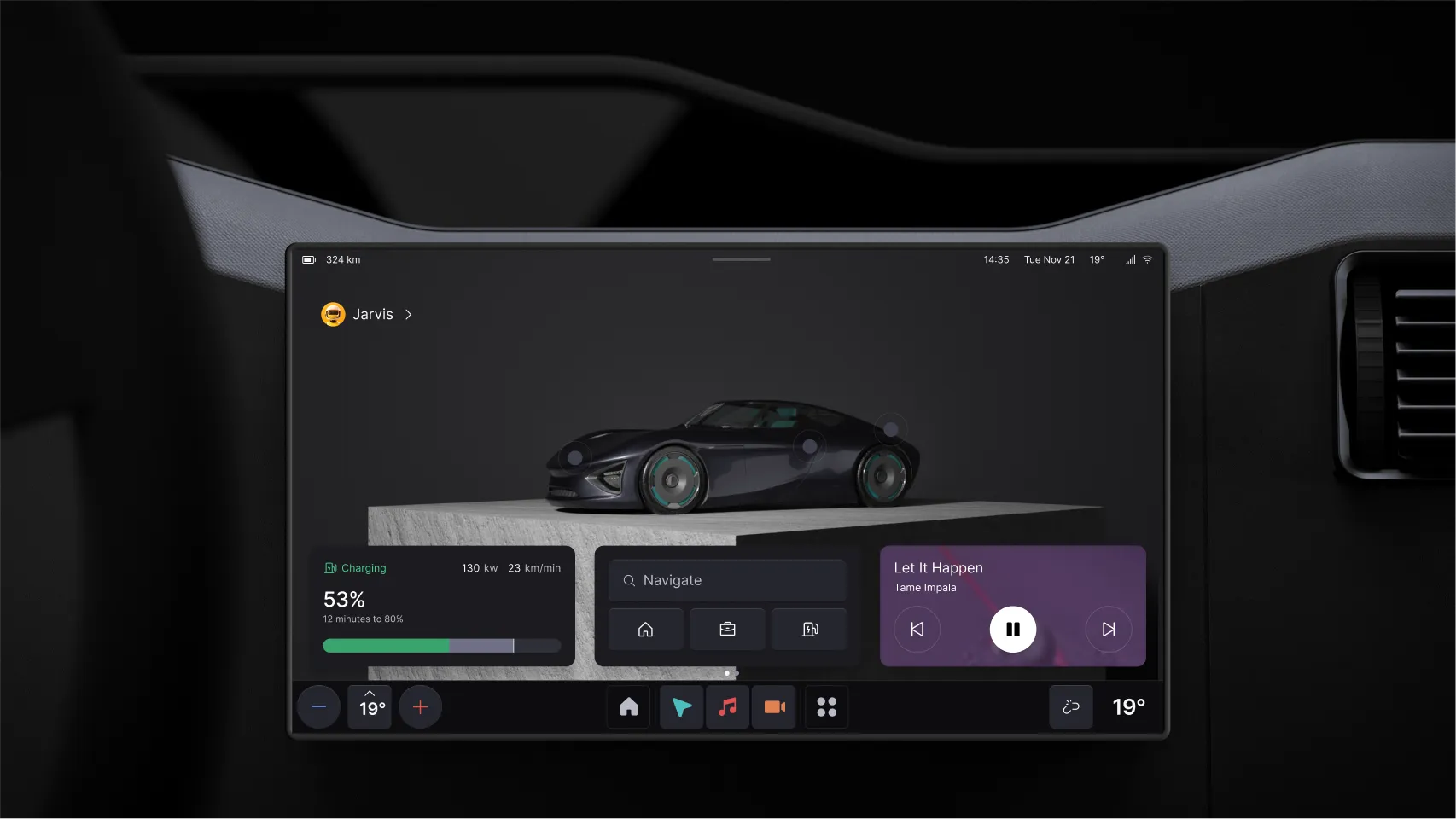
I spent a year working with my favorite car brand but realized that established car brands still did not understand software development and design. I lost hope that the car industry was made for me. I was ready to leave the car industry altogether but wanted to give it one last shot. The company I thought was leading the industry in design and process was Rivian. It was all the way in the US but I reached out to anyone I could find with experience there. They happened to have a few open positions and after an interview process they offered me one!
I moved my family to the US where I joined Rivian and have been having a blast working on autonomy and much more!
2. What is your best advice?
One main constant in my career is this blog. I can say with confidence that without this blog I would not have been working in the car industry. I tell every designer who reaches out the same thing: do something that shows your enthusiasm in this topic. It definitely doesn’t have to be an entire blog, or a fully produced project, but do something and share it publicly. Redesign climate controls, design a new type of gesture interaction, create a little prototype around voice interaction, design your favorite instrument cluster. Show the world your ideas.
When you do your project, make sure to highlight the automotive side. Dribbble is full of fancy infotainment designs that are irrelevant because the font size is too small, the use case is unrealistic, or it only shows a happy path. You don’t have to design a production-ready concept, but you do need to show that you understand the constraints around driver distraction.
3. What is your second best advice?
One of the best things that happened to me was not getting a job at Renault after my internship. It made me explore design agencies, scale-ups, help start a company by myself, start a blog, and more. It’s this diverse background that made me a much better designer than if I had stayed in the industry.
The car industry tends to swallow people. Once you are in, most people never leave. It is a huge industry but most people are the same and think the same. It needs change and that can only be brought from the outside.
4. Do I need specialist knowledge?
It’s not necessary to have previous knowledge but it helps to understand a few core concepts. Driver distraction is the most important one. Most design decisions in the car come back to it. Understanding why certain interactions are more distracting than others will immediately make your work more relevant. Cognitive load is closely related and worth reading up on too.
Designing, engineering, and manufacturing a car is a complicated process and there is a lot of knowledge related to regulations, work processes, etc. But you don’t need to know this before starting a role. You will easily learn this on the job so it’s more important to think like a designer than accumulate specialist knowledge.
5. Are there any books you can recommend?
There are not many books written specifically about automotive UX design. The one I can recommend is Automotive Interaction Design by Fang Chen and Jacques Terken. It covers the field well but it is not cheap (although you may find a way around that).

Automotive Interaction Design: From Theory to Practice
Fang Chen & Jacques Terken
More than books, I would recommend following scientific articles. Automotive interaction is a well-studied field and there are tons of papers out there. A great starting point is the overview on driver distraction below, as it covers the most important topic in automotive UX in a clear and structured way. But there are many, many more worth exploring.

Driver Distraction: Mechanisms, Evidence, Prevention and Mitigation
Michael A. Regan, John D. Lee & Kristie L. Young
6. What tools do I need to be able to use?
Figma is the industry standard. Almost every carmaker uses it, so know Figma well. Many teams also use ProtoPie for rapid prototyping, especially for simulating in-car interactions that are hard to capture in Figma alone.
Personally, I have been using Claude Code and other coding LLMs more and more and I would recommend any young designer to look into these. Being able to quickly build functional prototypes with code is becoming a real advantage.
If you are interested in it, exploring game engines like Unity or Unreal can be valuable too, especially for 3D interfaces and mixed reality work. But it is definitely not a requirement.
Beyond tools, focus on what you are already good at. If you are strong at visual design, make that your focus. If you prefer research, lean into that. Nobody can do it all. Design managers look to hire a well-rounded team, not a team of identical designers.
Ultimately, a tool is just that, a tool. It is a vehicle to bring your ideas to life. Being an expert at a tool is useless if your ideas aren’t valid. Anyone can learn a tool, not anyone can become a great designer.
7. What makes a good automotive UX portfolio?
Your portfolio does not have to be something specific for the car industry. So the same advice applies to all designers. However, when hiring for the car industry specifically, a few things matter more than in other fields.
Can you work on technical subjects? Cars are complex products with complex constraints. Show that you can navigate them. Can you work in large teams? A car involves hundreds of people across many disciplines. Show that you understand how design fits into a bigger process. And of course, do you understand automotive-specific constraints? Show that you know what driver distraction is, why it matters, and how it shaped your decisions.
If you don’t work in the car industry yet, it is perfectly fine to show work unrelated to cars. As long as your projects demonstrate the things mentioned above — working on technical subjects, collaborating in large teams, navigating complex constraints — that is what matters. If you don’t have any car-related projects, it helps to do a small side project that shows you understand the problem space. It does not have to be production-ready, but it should show that you have thought about the car context and its unique challenges.
8. How do I find open positions?
LinkedIn is the obvious starting point but it is not always the best one. Many positions in the car industry are filled through networks. The best thing you can do is start building a presence. Write about automotive UX, share your projects, and comment on what others are working on. The message I got that led to the infotainment startup came from someone who read my blog. That kind of thing happens more than you think.
Direct outreach works too. Find people who work where you want to work and send them a short message. Not asking for a job, but asking for a 20-minute call to learn about their experience. Most people are happy to talk about their work and share some advice.
9. What automotive UX jobs exist?
Designers often have a very specific picture in their mind when they imagine working at a carmaker. But the reality is that the car industry is massive and there are many different ways to work in it. It varies a lot depending on where you sit.
At a carmaker
Most carmakers are huge and have different design teams working across locations, departments, and products. One thing to be aware of is that working at a carmaker almost always means being on-site. Remote work is rare. Car design is a hands-on, collaborative process and most companies want their teams in the studio. That also means you are limited to the cities where carmakers have their offices. Most of them are clustered in a handful of places: Munich, Stuttgart, Gothenburg, Shanghai, Detroit, Los Angeles, and a few others. If you are serious about working at a carmaker, you have to be willing to move. This was true for me every single time I changed jobs. Here’s an overview of the main branches of a carmaker.
Design department
Working directly on the product is exciting. You are part of the design process of a real car and that is genuinely fun. If you’re a car nerd like me, it never gets boring to walk around the clay models and prototypes and get a glimpse of the future. Being in the core design team and seeing what a brand is working on years before anyone else knows is incredible. This is also why I am now working at Rivian. I just really like being at the heart of where the product is made.
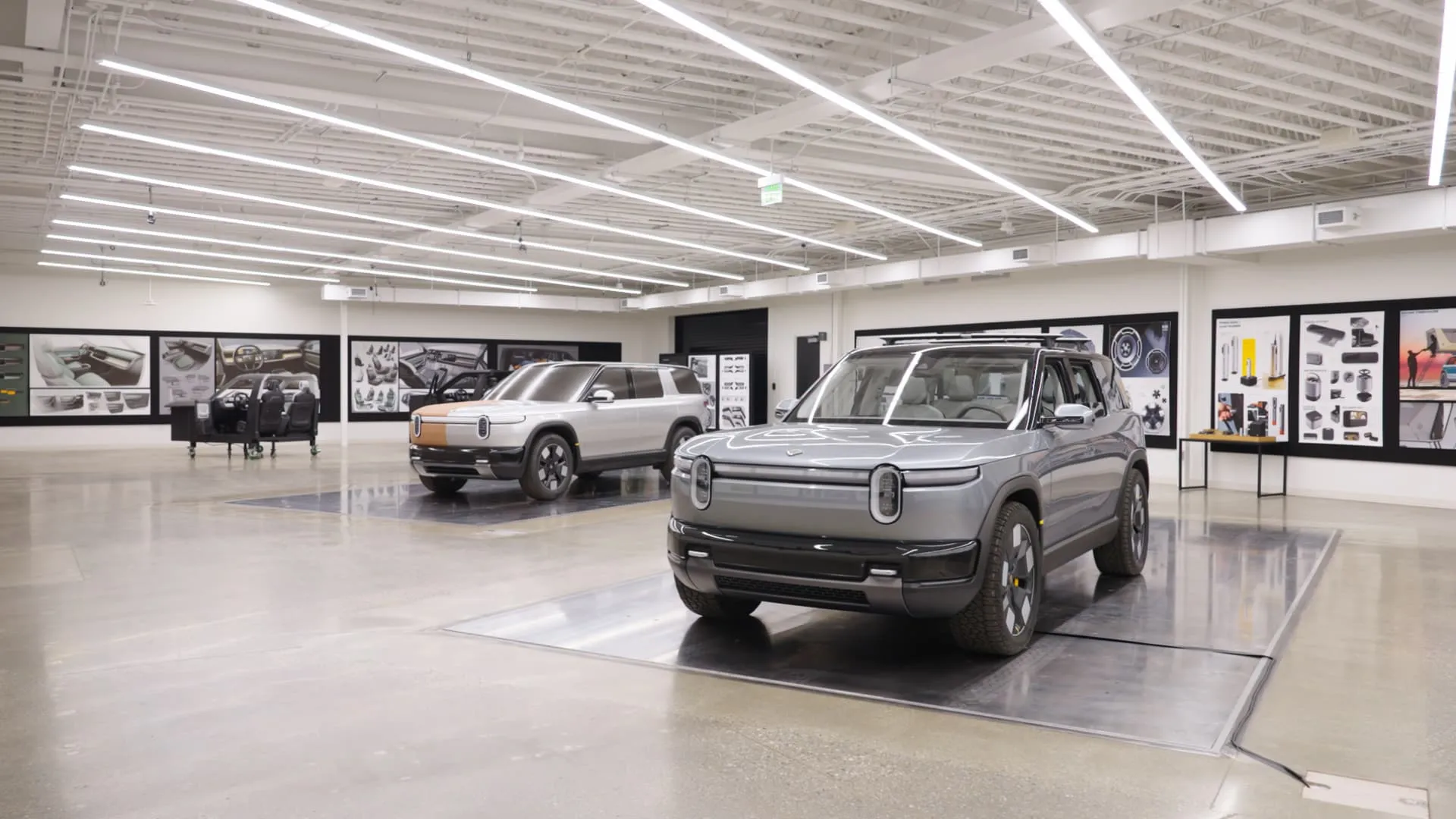
There is a big difference between established and new carmakers.
Traditional carmakers are still pretty new to the process of designing software. The design departments themselves often have really talented designers. But around them, the stakeholders and decision makers often have no idea what UX design is. Many of them are in positions of power. So you will spend a lot of time on politics and convincing people.
A lot of decisions are made from the engineering side. Engineers will come up with flows or wireframes and as a designer you are expected to stick to them. The role can feel very narrow. You are filling in wireframes rather than shaping the product.
Established carmakers also tend to split design disciplines in a way that feels old-fashioned. There is a UX design department, a UI design department, and a specification department. If you are in any one of these, you are producing a fraction of what you would at a tech company. Your work is under a lot of scrutiny and progress can be very slow. Especially if the carmaker is not doing regular software updates, it can take years for your work to reach a real car.
You will also work in conditions of extreme secrecy. There are years of NDAs involved and you cannot share what you are working on. Even after a car comes out, there are usually restrictions on what you can talk about publicly. This makes it hard to build a public portfolio.
However, large carmakers are still exciting places to work. The challenge of designing for different brands is fun and it can be genuinely exciting to see your work in products all over the world. If you enjoy focused work, owning a small part of the user experience and getting the most out of it, a large, traditional carmaker may be the place for you.
At a new carmaker, this looks much different. Teams are smaller and as a designer you have a lot more influence over the final product. You are not just doing UI work or just doing UX work. You are doing all of it, including research. If the company is mature in how it develops software, decisions are made in a much better way, with more responsibility sitting with the designer.
But new carmakers are often strapped for cash and you will be expected to do a lot more work in less time. There is more workload and more responsibility.
I definitely prefer working at a newer carmaker and I don’t think I could go back to an established one. But some people thrive in that environment. One is not necessarily better than the other.
R&D department
Some carmakers have R&D labs that work on future projects. This is super cool because you work on really exciting, innovative stuff. Often these are offices away from the main headquarters in different locations. They attract more curious, research-minded, sometimes more academic designers. The teams are smaller and the work is more exploratory.
With the focus now on autonomous driving, robotics, and everything that comes with it, there is some really exciting work happening in these labs.
The downside is that very little of it ends up in actual cars. A project might be shown at a conference, used for marketing, or serve as internal inspiration. But it may never make it into a real product. You can feel far removed from the company and the product. However, that can also be a good thing as you are further removed from the bureaucracy and politics of the mothership.
OEM subdivision
Many large car companies have subdivisions that are focused on software and UX design. Think of MBition for Mercedes, Cariad for Volkswagen, or Porsche Digital. They behave more like software companies than large carmakers, which is a good thing in many ways. The companies are smaller, the teams more cross-functional, and there is less bureaucracy and politics.
They have a more mature view on software and design. You work much closer to engineering, which is great. At many established carmakers, a lot of the engineering is outsourced, and even things like icon sets or typography are handled externally. Being at a subdivision and having control over all of that is really satisfying.
You may not always work on in-car topics. Companion apps, charging apps, and other digital products are often built in these companies. That can be super fun to work on.
But you are not in the main headquarters and you are further removed from the decisions about the future of the company and its design direction. For some people this is a good middle ground between the chaos of a startup and the bureaucracy of a traditional carmaker.
At a supplier or agency
Large hardware and software suppliers like Bosch, Continental, and LG do a huge amount of the actual engineering work that goes into a car. You could work at a carmaker through a supplier. There can be interesting R&D projects and a lot of flexibility in the type of work you take on.
The tradeoff is that you may end up doing the work that the internal team could not or did not want to do. You have less influence over the final design. But there are also more creative projects, especially on the R&D side.
Dedicated design agencies that work with carmakers are another option. Sometimes they help with production work like specifying designs or finishing the design cycle of a project. Sometimes they get asked to do the cool concept car work that the internal team does not have time for. Your work is more diverse and you get exposure to many different clients. I had great experiences working at agencies. Not in the car industry specifically, but just being able to work on all kinds of different projects. An agency can also be a way to get your foot in the door.
Third-party services
Many companies make products and services that end up in a car. Navigation and media are the most important user experiences in a car and those are mostly supplied by an external software company. Think of TomTom, HERE, or Mapbox. You can also work at large tech companies like Google or Apple on products like CarPlay, Google Maps, or Waze. Once you start looking into the software ecosystem in the car industry you will realize there are tons of companies, from startups to large tech companies, designing and building software that ends up in a car.
Working there, you are further removed from working on a specific car. But you could be working on many different cars at the same time. Depending on the company, you might be building white-label systems or tools that other carmakers integrate. You may be far removed from the final product but you work on really interesting problems.
From personal experience, I can highly recommend spending some years at a startup as you will learn so much more than working at a more traditional company. To me, finding a startup in the automotive industry is probably a sweet spot as a young designer.
The car industry is large and there are many ways into it. The path is rarely straight. Mine certainly wasn’t. But if you keep building, keep sharing, and stay curious about the problem space, you will find your way in. I will keep updating this article as I get more questions. If there is something I haven’t covered, reach out and I’ll add it.
Get notified of new posts
Don't worry, I won't spam you with anything else